
 eng
eng
 укр
укр
 рус
рус
A safe job search abroad starts with checking the employer or recruitment agency. A job offer should clearly state the country and city, company name, job responsibilities, work schedule, pay, type of employment contract, accommodation conditions, and any possible payroll deductions. Never transfer money to the personal bank accounts of strangers or hand over your original passport to third parties. Before leaving, obtain the employment terms in writing, verify the company's contact details, and keep copies of all documents. A reliable job abroad means legal employment, a clear contract, and the opportunity to ask the employer all important questions before your trip.
Cleaning jobs in Poland in 2026 include positions in offices, hotels, retail premises, warehouses and production facilities, as well as private homes. From 1 January 2026, the minimum wage for full-time employment under an umowa o pracę is PLN 4,806 gross per month, while the minimum hourly rate for civil-law contracts covered by the statutory guarantee is PLN 31.40 gross. Actual working conditions depend on the contract, number of hours, duties and individual employer. Read More
Book Warehouse Cleaner
4600 – 5600 PLN
- USD ≈ 1301 - 1584
- EUR ≈ 26833 - 32667
- CZK ≈ 30962 - 37692
- UAH ≈ 56350 - 68600
27 - 32
PLN / hr
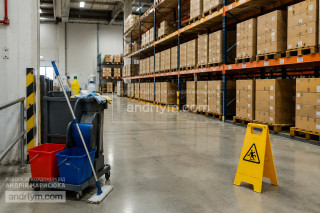
- Ołtarzew
- Mon - Fri, 8 hours/day
- Accommodation not provided
- Free Vacancy
The warehouse specializes in storing, picking, and preparing books
Housekeeper at a hotel complex
4400 – 6100 PLN
- USD ≈ 1245 - 1726
- EUR ≈ 25667 - 35583
- CZK ≈ 29615 - 41058
- UAH ≈ 53900 - 74725
25.36 - 31.40
PLN / hr
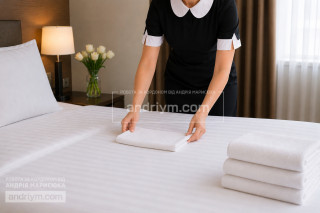
- Dziwnówek
- Rotating work schedule
- 300 zł/month
- Free Vacancy
The hotel complex on the Baltic Sea coast provides comfortable accommodation, restaurant services, a wellness area, and a wide range of services for family and active holidays
Cleaning service worker
3813 – 6174 PLN
- USD ≈ 1079 - 1747
- EUR ≈ 22242 - 36015
- CZK ≈ 25664 - 41556
- UAH ≈ 46709 - 75632
20.70 - 28.10
PLN / hr
- Wrocław
- Mon - Sun, 8 - 10 hours/day
- 400 zł/month
- Free Vacancy
A company specializing in cleaning apartments and kindergartens
Warehouse cleaner
5472 – 7868 PLN
- USD ≈ 1548 - 2226
- EUR ≈ 31920 - 45897
- CZK ≈ 36831 - 52958
- UAH ≈ 67032 - 96383
22,80 - 28,10
PLN / hr
- Sulechów
- Mon - Sat, 10 hours/day
- 500 zł/month
- Free Vacancy
One of the leading companies in warehouse, logistics, and industrial real estate in Europe and worldwide
Territory cleaner
7920 – 10116 PLN
- USD ≈ 2241 - 2862
- EUR ≈ 46200 - 59010
- CZK ≈ 53308 - 68088
- UAH ≈ 97020 - 123921
22 - 28,10
PLN / hr
- Radom
- Mon - Sat, 8 hours/day
- Not provided
- Free Vacancy
Modern three-story shopping center with a spacious indoor area, 130 stores featuring renowned Polish and global brands, and a cinema
Cleaning worker
3696 – 6100 PLN
- USD ≈ 1046 - 1726
- EUR ≈ 21560 - 35583
- CZK ≈ 24877 - 41058
- UAH ≈ 45276 - 74725
22 - 28.10
PLN / hr

- Jasin
- Mon - Fri, 8 hours/day
- Not provided
- Free Vacancy
A renowned tea manufacturer combining tea-drinking traditions with modern production technologies
Poultry plant cleaning worker
4224 – 6400 PLN
- USD ≈ 1195 - 1811
- EUR ≈ 24640 - 37333
- CZK ≈ 28431 - 43077
- UAH ≈ 51744 - 78400
22 - 28.10
PLN / hr

- Siedlce
- Mon - Fri, 8 hours/day
- Not provided
- Free Vacancy
A producer of a wide range of poultry products
Apartment cleaning worker
4000 – 4500 PLN
- USD ≈ 1132 - 1273
- EUR ≈ 23333 - 26250
- CZK ≈ 26923 - 30288
- UAH ≈ 49000 - 55125
21 - 28.10
PLN / hr

- Krąków
- Mon - Fri, 7 - 8 hours/day
- Not provided
- Free Vacancy
A modern cleaning company founded by steadfast guardians of order and harmony
Poultry farm cleaning worker
4224 – 6300 PLN
- USD ≈ 1195 - 1782
- EUR ≈ 24640 - 36750
- CZK ≈ 28431 - 42404
- UAH ≈ 51744 - 77175
22 - 28.10
PLN / hr

- Tomaszow Mazowiecki
- Floating work schedule, 8 - 12 hours/day
- Not provided
- Free Vacancy
Production of a wide range of poultry meat products
Frequently Asked Questions
The required documents depend on the country, the applicant's citizenship, profession, and legal basis for residence. In most cases, working abroad requires a valid passport, proof of legal stay, a work permit or another legal basis for employment, and an employment contract. Some professions may also require diplomas, certificates, or medical documents. Before travelling, confirm the requirements for your specific job offer and check that all documents remain valid. Do not agree to work without official documentation, as legal employment protects your rights to fair pay, rest periods, insurance, and safe working conditions.
Ask for the employer's full legal name, address, registration details, job description, and a draft of the employment contract. Compare the information in the job offer with the contract, including the hourly or monthly pay, working hours, bonuses, accommodation, transportation, and all possible deductions. Check the company's website, independent reviews, and contact details, but remember that reviews alone are not a substitute for official documents. Be cautious if you are promised unusually high earnings with no requirements, pressured to make immediate payments, or refused information about the employer. A trustworthy job offer provides clear conditions and allows you to receive written confirmation before making a decision.
Before travelling, check your passport, documents required for legal residence and employment, your contract, accommodation address, and the contact details of the responsible coordinator. Make both digital and printed copies of your documents, arrange the necessary insurance, and prepare a financial reserve for the first few weeks. Find out your travel route, accommodation check-in rules, transportation costs, work clothing requirements, and the date of your first shift in advance. Share your accommodation address and employer's contact details with your family or trusted contacts. Good preparation reduces the risk of unexpected expenses and helps you start working in a new country with confidence.
Cleaning Jobs in Poland in 2026: Pay, Working Conditions, Contracts and Safety
Cleaning jobs in Poland can vary considerably depending on the workplace, scope of duties, schedule, type of contract and job requirements. Before accepting a position, it is important to check not only the advertised rate but also whether it is stated as gross or net pay, how many paid hours are provided for under the contract, who pays for accommodation and transport, how working time is recorded, and on what legal basis a foreign worker may work in Poland.
Types of cleaning jobs available in Poland
Cleaning vacancies may involve offices, administrative buildings, hotels, retail premises, warehouses, production facilities and private homes. Hotel cleaning jobs in Poland often include housekeeping duties such as preparing guest rooms, changing bed linen, cleaning sanitary areas and replenishing supplies in accordance with the standards of the particular property.
Some positions may involve medical facilities, food-handling areas or premises subject to special hygiene requirements. These duties are not part of every cleaning job. In medical, food and other controlled areas, work should only be carried out in accordance with the specific site's procedures, training provided and applicable instructions.
Typical duties in a cleaning job
Typical duties may include dry and wet cleaning, vacuuming, washing floors and work surfaces, cleaning sanitary areas, removing waste and replenishing toilet paper, soap and other consumable supplies. In hotels, responsibilities may also include cleaning guest rooms, changing linen and preparing rooms in accordance with the property's standards.
Floor-cleaning machines, specialist equipment and products requiring specific operating procedures should only be used after appropriate instruction or training. There is no single Poland-wide standard for the number of hotel rooms, square metres or premises that one person must clean during a shift. Workload expectations, performance criteria and the list of duties should be explained clearly by the employer in advance, preferably in writing.
Job requirements: experience, language and physical demands
Requirements depend on the specific vacancy. Some cleaning jobs do not require previous experience if the employer provides training, while specialist cleaning roles may require experience with particular equipment or procedures. The required level of Polish also varies by position. At a minimum, workers need to be able to understand work instructions, warnings, chemical labels and safety rules, or receive this information in a language they understand.
Cleaning work may involve prolonged standing, bending, repetitive movements, moving equipment and other physical demands. Job requirements should relate to the actual duties and the ability to perform them safely. There is no universal rule that cleaning work is intended only for people of a particular gender or age group.
Cleaning pay in Poland in 2026
From 1 January 2026, the nationwide minimum wage for a full-time employee working under an umowa o pracę is PLN 4,806 gross per month. The minimum hourly rate for civil-law contracts covered by the relevant statutory guarantee, including qualifying umowa zlecenie contracts, is PLN 31.40 gross per hour. These are statutory minimum rates, not an average salary for cleaning jobs in Poland.
Gross pay is the amount before applicable taxes and contributions, while net pay is the amount actually received after lawful deductions. Net pay cannot be accurately calculated using one universal percentage because the final amount depends on the type of contract, insurance, tax circumstances and other legally relevant factors. Current minimum-pay information can be checked on gov.pl, while the applicable legislation can be verified through ELI.
When comparing job offers, check the gross rate, guaranteed number of paid hours, time-recording rules, conditions for bonuses, workload standards and any lawful deductions. A high hourly rate does not by itself guarantee a high monthly income if the contract does not provide enough paid hours.
Umowa o pracę and umowa zlecenie: key differences
An umowa o pracę establishes an employment relationship and provides protections under Polish labour law, including rules on working time, paid annual leave and other employee rights. An umowa zlecenie is a civil-law contract and is governed differently. Paid leave, sickness-related payments and other protections should not be assumed to apply in the same way under both types of contract.
Insurance coverage and entitlement to particular benefits depend on the legal basis of the work, applicable insurance and the individual circumstances. Before starting work, the worker should receive a written contract and check the contracting parties, type of contract, position or nature of the work, pay, working time or number of hours, place of work and other agreed conditions.
Schedules, shifts, night work and time records
Eight- or twelve-hour shifts and working five or six days per week are not universal standards for cleaning jobs in Poland. The schedule depends on the type of contract, working-time arrangements and the site. Office cleaning may take place before or after regular office hours, while hotels, retail premises, warehouses and production facilities may operate shift systems.
Before signing a contract, clarify shift start and finish times, breaks, night work, weekend and public-holiday work, and how working time is recorded. Under an umowa o pracę, overtime and night work are governed by labour law. For an umowa zlecenie, accurate recording of hours is particularly important where the statutory minimum hourly rate applies.
BHP: health and safety in cleaning work
Where an employment relationship exists, the employer must comply with Polish occupational health and safety requirements, commonly referred to as BHP. This includes providing required safety training and, where required by law, occupational medical examinations. Workers should be informed about hazards at their specific workplace and about safe methods for performing their duties.
Basic precautions include using equipment that is in safe working condition, following instructions, placing warning signs around wet or slippery floors, and using personal protective equipment (PPE) where required by the workplace risk assessment and the nature of the task. Occupational safety resources are available from CIOP-PIB, while information about employment rights and BHP is provided by the Polish National Labour Inspectorate (PIP).
Cleaning chemicals and safe handling
Cleaning and disinfecting products should be used according to their labels, employer instructions and, where applicable, the relevant karta charakterystyki, or Safety Data Sheet (SDS). Workers should follow specified dilution and dosing instructions, ventilation requirements and rules concerning gloves, eye protection or other PPE required for the particular product and task.
Chemicals should not be transferred into unlabelled bottles or containers where the contents and hazards can no longer be correctly identified. Cleaning products should not be mixed without specific authorised instructions. In particular, bleach and other chlorine-containing products must not be mixed with acids or ammonia because the reaction can release toxic gases. If the correct use of a product is unclear, stop using it and obtain instructions rather than improvising.
Special risks in medical and food areas
At some sites, workers may encounter sharps, needles, biological material, contamination requiring specialist disinfection or areas subject to specific hygiene controls. These hazards are not present in every cleaning position.
Unknown sharp objects, used needles and potentially hazardous biological materials should never be picked up with unprotected hands. Work should be stopped, access to the hazardous area restricted where required by site procedures, and the responsible person notified. In medical facilities, food areas and other controlled environments, workers should follow only the procedures established for that particular site and the training they have received.
Other risks: slips, manual handling and equipment
Cleaning-related risks may include slipping on wet floors, falls, incorrect use of stepladders, manual handling, repetitive movements and excessive strain on particular parts of the body. Available trolleys and other handling aids should be used where appropriate, ergonomic principles should be followed, and tasks should not be performed unsafely simply to work faster.
Vacuum cleaners, floor-cleaning machines and other electrical equipment must be in safe working condition and used only for their intended purpose. Damaged cables, faulty machines, missing guards and other hazards should be reported to the responsible person. Where work is performed alone, the worker should know how to contact the appropriate person in the event of an accident, injury or other dangerous situation.
Legal employment of foreign workers in Poland in 2026
The legal basis for a foreign worker to work in Poland depends on their lawful basis of stay, documents and authorization to work. It should not be assumed that a single procedure applies to every foreign worker. The requirements must be checked for the individual's circumstances before employment begins.
A contract with a foreign worker must be concluded in writing before the person is admitted to work. If the worker does not understand Polish sufficiently to understand the contract, they must be provided, before signing, with the written contract terms in a language they understand. After the contract is concluded, the worker should receive their copy.
Before work begins, it is important to verify that the actual job corresponds to the contract and to the documents or legal basis allowing the person to work. Current requirements and procedures should be checked immediately before employment through gov.pl, praca.gov.pl and the Polish National Labour Inspectorate (PIP). Official legislative texts can be checked through ELI.
Before a worker is admitted to work, the written contract should be checked carefully for the employer's details, type of contract, position or nature of the duties, place of work, amount and method of calculating pay, working time or number of hours, and other material conditions. Verbal promises of higher pay, free accommodation, additional hours or bonuses should not replace terms that need to be established in writing.
If a contract or other document is not understood, it should not be signed without clarification. A foreign worker who does not understand Polish sufficiently must be provided before signing with the legally required written version of the relevant terms in a language they understand. Official information about foreign workers' employment rights can be checked through the PIP portal for foreign workers.
Accommodation, transport, costs and employer checks
Free accommodation, transport or meals are not universal features of cleaning jobs. If an employer or employment agency offers accommodation, transport, workwear or other additional services, obtain written information before arrival about the cost, accommodation address and conditions, any deposit, the rules for returning it and any applicable deductions.
Do not assess a job offer solely by an advertised “take-home” amount. Ask for a written calculation or a clear explanation of how pay is calculated and what amounts may lawfully be deducted. Offers in which the actual cost of accommodation, transport or other services is disclosed only after arrival require particular caution.
A Polish sole trader or other business listed there can be checked in the official CEIDG register, while companies and other entities entered in the National Court Register can be checked through KRS. If an employment agency is arranging the job, verify that it appears in the official KRAZ employment agency register.
Official vacancies from Poland's public employment services can be searched through ePraca, formerly the Centralna Baza Ofert Pracy (CBOP). The fact that an advertisement appears on any particular website does not remove the need to verify the employer, contract and legality of the employment arrangement.
Warning signs include refusal to identify the legal entity employing the worker, demands to work without a written contract, concealment of the gross rate or deductions, requests to surrender a passport “for safekeeping,” unexplained payments for obtaining a job, or pressure to sign documents immediately when the candidate does not understand their contents. Information about employment rights and available support can be obtained through the Polish National Labour Inspectorate (PIP).
Checklist before starting a cleaning job in Poland
Before accepting a cleaning job in Poland, check who the actual employer is and whether the relevant business can be verified through CEIDG or KRS; whether an employment agency is registered in KRAZ if one is involved; whether you have the required legal basis for lawful stay and work; what type of contract is being offered; whether you will receive a written contract before starting work and the required version of its terms in a language you understand; the gross pay rate; how and when wages are paid; how many hours are provided for; how working time is recorded; and the rules for shifts, breaks, night work and overtime.
Also clarify the exact duties and workload expectations; the address and type of workplace; whether special hygiene procedures apply; what training and BHP arrangements are provided; which chemicals and equipment will be used; who supplies the required PPE; the cost of accommodation and transport; whether a deposit is required; what deductions may apply; what happens if the worksite or schedule changes; and whom to contact in the event of an injury, hazardous situation or suspected violation of employment rights.
For verification, rely primarily on official Polish sources: gov.pl for government information; praca.gov.pl for electronic employment procedures; ePraca/CBOP for job vacancies; PIP for employment rights and BHP; CIOP-PIB for occupational safety resources; ELI for official legislation; CEIDG and KRS for business verification; and KRAZ for checking employment agencies. For legal employment in Poland in 2026, applicable rules should be verified immediately before starting a job because the required legal basis and procedure depend on the individual's circumstances.
