
 eng
eng
 укр
укр
 рус
рус
A safe job search abroad starts with checking the employer or recruitment agency. A job offer should clearly state the country and city, company name, job responsibilities, work schedule, pay, type of employment contract, accommodation conditions, and any possible payroll deductions. Never transfer money to the personal bank accounts of strangers or hand over your original passport to third parties. Before leaving, obtain the employment terms in writing, verify the company's contact details, and keep copies of all documents. A reliable job abroad means legal employment, a clear contract, and the opportunity to ask the employer all important questions before your trip.
Working as a cook in Poland in 2026 offers opportunities in restaurants, hotels, canteens, catering companies, hospitals, schools and production kitchens. Before accepting a job, check the position and duties, gross pay and estimated net pay, contract type, schedule, accommodation, experience and Polish-language requirements, medical documentation and the legal basis for employment. Updated on 14 August 2026. Read More
Pizza Assistant
5200 – 6100 PLN
- USD ≈ 1471 - 1726
- EUR ≈ 30333 - 35583
- CZK ≈ 35000 - 41058
- UAH ≈ 63700 - 74725
26 - 28
PLN / hr
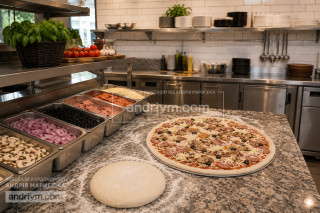
- Płock
- Rotating shift pattern, 10 - 11 hours per day
- 800 zł/month
- Free Vacancy
The restaurant specializes in preparing pizza and other Italian dishes, maintaining high standards of quality and customer service
Assistant cook
7400 – 8700 PLN
- USD ≈ 2094 - 2461
- EUR ≈ 43167 - 50750
- CZK ≈ 49808 - 58558
- UAH ≈ 90650 - 106575
26 - 28
PLN / hr
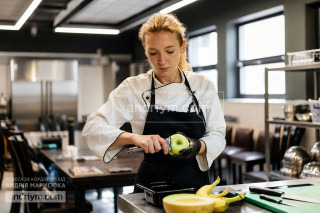
- Mikołajki
- Rotating work schedule, 12 hours per day
- 800 PLN/month
- Free Vacancy
The restaurant prepares and serves food and beverages to guests, providing high-quality service and a comfortable atmosphere for visitors
Worker for Catering
4000 – 5100 PLN
- USD ≈ 1132 - 1443
- EUR ≈ 23333 - 29750
- CZK ≈ 26923 - 34327
- UAH ≈ 49000 - 62475
22
PLN / hr

- Warszawa
- 5 days/week for 8-10 hours/day
- 450 PLN/month
- Free Vacancy
A company specializing in the preparation and serving of food to clients
Frequently Asked Questions
The required documents depend on the country, the applicant's citizenship, profession, and legal basis for residence. In most cases, working abroad requires a valid passport, proof of legal stay, a work permit or another legal basis for employment, and an employment contract. Some professions may also require diplomas, certificates, or medical documents. Before travelling, confirm the requirements for your specific job offer and check that all documents remain valid. Do not agree to work without official documentation, as legal employment protects your rights to fair pay, rest periods, insurance, and safe working conditions.
Ask for the employer's full legal name, address, registration details, job description, and a draft of the employment contract. Compare the information in the job offer with the contract, including the hourly or monthly pay, working hours, bonuses, accommodation, transportation, and all possible deductions. Check the company's website, independent reviews, and contact details, but remember that reviews alone are not a substitute for official documents. Be cautious if you are promised unusually high earnings with no requirements, pressured to make immediate payments, or refused information about the employer. A trustworthy job offer provides clear conditions and allows you to receive written confirmation before making a decision.
Before travelling, check your passport, documents required for legal residence and employment, your contract, accommodation address, and the contact details of the responsible coordinator. Make both digital and printed copies of your documents, arrange the necessary insurance, and prepare a financial reserve for the first few weeks. Find out your travel route, accommodation check-in rules, transportation costs, work clothing requirements, and the date of your first shift in advance. Share your accommodation address and employer's contact details with your family or trusted contacts. Good preparation reduces the risk of unexpected expenses and helps you start working in a new country with confidence.
Reviews about the work
Всім привіт. Працював поваром у ресторанні польської національної кухні “Біда”. Спочатку мене злякала назва ресторану. Але попрацювавши декілька днів зрозумів що знайшов ідеальне місце праці. Власники даного ресторану відносилися до мене з повагою і завжди допомагали у не зрозумілих ситуаціях. Найбільше мені сподобалося те що моя заробітня плата складала 25 злотих в годину. Якщо ви майстер своєї справи приїжджайте на працю в Польщу.
Доброго дня. Працювала в Польщі поваром. Все сподобалося. Зарплата 13.5 злотих на руки за годину. Житлом забезпечують. Харчування за власний рахунок. В мої обов’язки входило: мийка, чистка та нарізка овочів та фруктів, приготування страв. Зміни по 10-12 год. Ставлення до мене було дуже хороше. Наступного разу знову планую сюди приїхати.
Доброго дня. Працював кухарем гарячого процесу в ресторані «Ополе». Треба трішки знати мову, або швидко почати вивчати, щоб розуміти процеси. Але в цілому всі один одному допомагають. Працювати треба дуже багато від 12 годин, інколи без вихідних. Отримували 17-20 злотих чистими. Дуже важко, якщо не маєш досвіду в цій сфері. Але по грошах вийшло добре, тому знову приїду. Запропонували посаду су-шефа, так як пропрацювала в них 10 місяців. Зараз роблю запрошення на рік знову.
Working as a Cook in Poland in 2026: Pay, Vacancies, Requirements and Legal Employment
Working as a cook in Poland in 2026 includes opportunities not only in restaurants and cafés, but also in hotels, canteens, catering companies, hospitals, schools and production kitchens. Working conditions vary considerably: some positions require experience working independently on a hot-food section, while others allow candidates to start as a kitchen assistant and receive on-the-job training. Before applying, check the actual duties, contract type, gross pay, schedule, additional payments, Polish-language requirements, medical documentation, accommodation conditions and whether the employment is legal.
This information was updated on 14 August 2026. Rules governing the residence and employment of foreign workers may change, so before signing a contract, check the requirements applicable to your individual situation using official Polish resources such as gov.pl, praca.gov.pl and the website of the Państwowa Inspekcja Pracy (PIP).
1. Where a cook can work in Poland
A job title alone does not reveal all the actual working conditions. In a restaurant, a cook typically works with an à la carte menu, real-time orders, food preparation and service during peak periods. In a hotel, the role may also include preparing breakfasts, banquets, conference catering and meals for large groups. Working hours often depend on hotel occupancy and scheduled events.
In a canteen, school or hospital, cooks are more likely to prepare large batches of food according to established menus and operating procedures. Accurate portioning, dietary requirements, allergen control, hygiene procedures and timely meal service are particularly important. Healthcare facilities may also have additional internal procedures for therapeutic or special-diet meals.
Catering work may involve preparing, packing, transporting and sometimes serving food at another location. In a production kitchen, the job may resemble standardised food manufacturing more closely, with large volumes, approved recipes, batch and temperature controls, labelling, traceability and hygiene procedures.
Before accepting a position, clarify not only the type of establishment but also the specific kitchen section, expected number of portions or orders, menu format, team size per shift and the actual list of duties.
2. Kitchen assistant, cook and head chef: what is the difference?
Polish job advertisements may use titles such as pomoc kuchenna, pomocnik kucharza, kucharz, chef de partie and szef kuchni. These roles are not interchangeable, and the exact scope of work should always be checked against the job description and employment contract.
- Pomoc kuchenna — general kitchen support, including washing and preparing ingredients, maintaining cleanliness, handling dishes, carrying out simple preparation tasks, moving supplies and assisting the kitchen team.
- Pomocnik kucharza — an assistant cook who performs preparation work and basic cooking tasks under the supervision of a more experienced employee.
- Kucharz — a cook who independently prepares dishes or their components according to recipes, technical specifications and the establishment's standards.
- Chef de partie — a cook responsible for a particular kitchen section or station, such as hot dishes, cold dishes or side dishes; the precise level of responsibility varies between establishments.
- Szef kuchni — a head chef who organises kitchen operations and supervises the team, quality and production processes and, depending on the establishment, may also be responsible for menus, purchasing, food costs, inventory and documentation.
A job title should not disguise the actual responsibilities. If an employer advertises a kitchen-assistant position but expects the employee to run a station independently and take responsibility for food service, this should be clarified before the contract is signed.
3. What duties does a cook perform?
Typical duties include receiving and preparing ingredients, carrying out mise en place, cooking according to recipes, portioning, quality control, proper cooling and storage of food, maintaining a clean workstation and following food-safety procedures.
Depending on the position, responsibilities may also include monitoring inventory and use-by dates, labelling opened or prepared products, maintaining temperature records, participating in stocktaking, receiving deliveries, handing over between shifts and training new employees.
Before accepting a vacancy, ask which kitchen section you will be responsible for; how many people work on each shift; how many dishes or portions are normally prepared; whether standardised recipes or technical sheets are used; who is responsible for dishwashing and cleaning; whether receiving goods, stocktaking and ordering supplies are part of the role; whether banquet work is required; and whether night shifts are scheduled.
4. Experience, education and Polish-language skills
A culinary diploma should not be treated as a universal “licence” without which it is impossible to work as a cook in Poland. A particular employer may require vocational education, a culinary-course certificate or documented practical experience, but these requirements depend on the vacancy and the level of responsibility.
An employer may accept a kitchen assistant without previous professional experience and provide workplace training. An independent cook is more commonly expected to have practical experience, follow recipes correctly and organise their own station. A head chef needs not only cooking skills but also the ability to organise a team, plan production and control quality, stock and costs.
Polish-language skills are important primarily for safe and effective work. Employees need to understand supervisors' instructions, names of ingredients and equipment, technical sheets, allergen information, HACCP and BHP procedures, safety warnings and instructions for unusual or emergency situations. Basic Polish may be sufficient for some kitchen-assistant vacancies, while cooks and head chefs who coordinate other employees generally need stronger professional communication skills.
5. Medical examinations for work involving food
For work where there is a possibility of transmitting an infection to other people, badania do celów sanitarno-epidemiologicznych — examinations for sanitary and epidemiological purposes — may be required. Following the necessary examinations, a doctor issues an orzeczenie lekarskie do celów sanitarno-epidemiologicznych, a medical certificate stating whether there are contraindications to performing the relevant work.
It is inaccurate to describe this document as a “European sanitary booklet”. Polish sanitary authorities explain the current requirements in terms of the medical certificate, while the expression książeczka sanepidowska continues to be used mainly as an informal term. For work involving direct contact with food, the applicable requirements concerning the medical certificate should be checked before the employee starts the relevant duties.
There is no universal rule requiring every cook to “renew sanepid every six months” or “once a year”. The need for and scope of examinations depend on applicable law, the nature of the work and medical assessment. When required for employment, the employer provides the appropriate referral and bears the costs of mandatory examinations associated with fitness for the relevant work as required by law. Current practical requirements should be checked through the Główny Inspektorat Sanitarny (GIS) and current guidance from the Państwowa Inspekcja Pracy.
6. HACCP, GHP and GMP in a professional kitchen
A professional kitchen is about more than preparing good food. Regulation (EC) No 852/2004 establishes food-hygiene requirements and provides for procedures based on HACCP principles. In practice, employees must understand and follow the procedures established for their specific workplace rather than relying on universal temperatures or storage times chosen “by eye”.
GHP, or Good Hygiene Practice, covers areas such as personal hygiene, handwashing, cleanliness of premises, equipment and utensils, waste management and protection of food against contamination. GMP, or Good Manufacturing Practice, concerns the proper organisation of production processes, raw materials, equipment, production, storage and controls.
HACCP is based on identifying and analysing hazards, determining critical control points where appropriate, establishing critical limits, monitoring, corrective actions, verification and appropriate documentation. The official requirements can be found in Regulation (EC) No 852/2004 on EUR-Lex.
7. Cold chain, temperatures and cross-contamination
A cook must maintain the cold chain for foods that cannot be safely stored at room temperature. Specific temperature limits depend on the product, process, legal requirements and the establishment's own procedures. Employees should know where and how temperatures must be measured, how results are recorded and what action to take when a reading falls outside the permitted limits.
Raw products must be separated from ready-to-eat food in accordance with workplace procedures. Particular attention should be paid to hands, knives, cutting boards, containers, refrigeration equipment and work surfaces. After handling raw ingredients, an employee must not move directly to ready-to-eat food without completing the necessary hygiene measures.
Hands must be washed in situations specified by workplace procedures, including before handling ready-to-eat food and after activities that may have contaminated the hands. Cleaning and disinfection should follow an established plan using the correct products, concentrations and methods. Labelling requirements, rules for using products after opening or preparation, and food and batch traceability procedures must also be followed.
8. Allergens: what a cook needs to know
Allergen information is regulated in particular by Regulation (EU) No 1169/2011. Annex II identifies 14 categories of substances or products causing allergies or intolerances, subject to the exemptions specified in the legislation.
These include cereals containing gluten, crustaceans, eggs, fish, peanuts, soybeans, milk, nuts, celery, mustard, sesame seeds, sulphur dioxide and sulphites under specified conditions, lupin and molluscs.
Cooks must follow approved recipes and workplace procedures, avoid substituting ingredients without appropriately updating the relevant information, know where to verify a product's composition and prevent unintended allergen transfer through hands, utensils, work surfaces, frying oil, cookware or equipment. If an employee is uncertain about a dish's ingredients, the correct approach is to check the documentation and consult the responsible person rather than provide a guest with unverified information.
9. Workplace safety in the kitchen
Professional kitchens involve risks including cuts, burns, slips and falls, contact with hot oil and steam, injuries involving machinery, exposure to cleaning chemicals and physical overexertion. Employees must complete the BHP training required for their work and follow the employer's safety instructions.
Knives should be used for their intended purpose and stored safely. When working with cookers, ovens, hot containers and deep fryers, employees should follow workplace procedures and use the required protective equipment. Slicers, mixers, meat grinders and other machinery must not be cleaned or dismantled contrary to the manufacturer's instructions or safe isolation procedures.
Chemical products must be properly labelled, stored separately from food and used according to their instructions. Slip-resistant work footwear is important in kitchens. Ergonomics also matters: heavy loads should be moved safely, and workstations should be organised to reduce unnecessary physical strain and the risk of injury.
10. Schedules, shifts, breaks and overtime
Cooks may work mornings, afternoons, evenings or nights, while restaurants, hotels, catering companies and establishments providing continuous services often operate at weekends and on public holidays. However, the nature of the hospitality industry does not allow an employer to set working hours arbitrarily.
Working time, breaks, minimum rest periods, night work, Sunday and public-holiday work, compensation and overtime depend on the legal basis of employment and the rules applicable to the particular arrangement. Under an umowa o pracę, employees are covered by labour-law protections concerning working time and rest. Hospitality businesses may use working-time systems that permit shifts longer than a standard working day, provided the applicable legal requirements and compensation rules within the relevant reference period are observed.
Before signing a contract, ask for a concrete example of the schedule: start and finish times, number of shifts per week, breaks, night work, Sunday and public-holiday work, time-recording procedures and the rules for compensating overtime. Do not rely on a verbal arrangement that contradicts the written contract or applicable law. Current guidance on employee rights is published by the Państwowa Inspekcja Pracy.
11. Cook pay: gross, net and what to check in a vacancy
There is no single accurate figure for “a cook's salary in Poland”. Pay varies by position, city, experience, type of establishment, level of responsibility, working hours, contract type and additional payments. For that reason, this article deliberately does not provide an alleged “market average” separately for pomoc kuchenna, kucharz, chef de partie and szef kuchni without a dated and sufficiently representative sample of vacancies.
For your own comparison, review several current job advertisements collected or checked on the same date, in the same city and for the same role. Compare only vacancies where it is clear whether the quoted amount is gross or net and where the contract type, full-time or part-time status, or guaranteed number of hours is known. Accommodation, meals, bonuses, transport and other benefits or deductions should be assessed separately.
In 2026, Poland's minimum wage is PLN 4,806 gross per month for full-time employment under an umowa o pracę. The minimum hourly rate for civil-law contracts covered by the relevant statutory guarantee is PLN 31.40 gross per hour. These are statutory minimum rates, not the average or typical pay of a cook.
Gross pay is the amount before applicable taxes and contributions, while net pay is the amount actually paid after applicable deductions. A universal net amount cannot reliably be calculated from gross pay alone because the result depends on the contract, social-insurance contributions, tax circumstances and other legally relevant factors.
In a vacancy, check the basic gross rate, guaranteed number of hours or full-time equivalent, time-recording rules, possible supplements, bonuses, meals and accommodation. If accommodation is paid, ask for the exact cost, utility charges, deposit, number of people sharing a room and rules for deductions from wages. Claims of “free accommodation” or “free meals” should be supported by specific terms rather than treated merely as advertising promises.
12. How a foreign worker can work legally in Poland in 2026
The legality of a foreign worker's employment must be assessed individually before work begins. The right to work depends on lawful residence, the person's legal status, any applicable exemption from the requirement to obtain a work permit and other grounds provided for under Polish law. Possession of a passport or lawful residence does not in itself always mean that a person may automatically work without additional formalities.
Depending on the circumstances, an appropriate work permit may be required, or a statutory exemption from that requirement may apply. The obligations of the employer and worker differ according to the legal basis of residence and employment. A procedure applicable to one category of foreign workers should therefore not be assumed to apply to everyone. Current general requirements should be checked through praca.gov.pl and the official guidance of the Państwowa Inspekcja Pracy.
The contract with a foreign worker must be concluded in writing before the person is allowed to start work. Before the contract is signed, the Polish entity assigning the work must provide the foreign worker with a written translation of the contract into a language the worker understands. After signing, the worker should receive their own copy of the contract. Do not start work solely on the basis of a verbal promise that the paperwork will be completed later.
Before signing, verify the employer's details, contract type, position, workplace, pay, working hours and other material terms against the documents or legal basis under which the work is to be performed. If a permit or another formality is required in the particular case, the actual working conditions must comply with the applicable requirements.
Under an umowa o pracę, the employer must fulfil the statutory obligations relating to social insurance and ZUS. For civil-law contracts, contribution and insurance rules depend on the type of contract and the individual worker's circumstances. If a vacancy promises “legal employment without ZUS”, ask for a written explanation of the contract type and the legal basis for the absence of specific contributions.
13. Where to find vacancies and how to check an employer or agency
Cook vacancies can be found directly on the websites of restaurants, hotels, catering and food-production companies, on Polish job portals, through public employment services or through legitimate employment agencies. Useful Polish search terms include kucharz, pomoc kuchenna, pomocnik kucharza, chef de partie and szef kuchni, but the actual description of duties should always be reviewed carefully.
If an employment agency acts as an intermediary, check it in the official KRAZ register. Verify not only the agency's name but also its registration number, NIP, current status, whether its activity is suspended, and the types of services it is authorised to provide, such as employment intermediation or temporary work, together with any other relevant information shown in the register. A KRAZ registration does not replace verification of the contract, the actual employer and the specific vacancy.
Red flags include:
- refusal to identify the legal entity that is the employer or employment agency;
- an offer to start work without a written contract;
- a request to sign a blank or incomprehensible document;
- a salary advertised without stating whether it is gross or net;
- a verbal promise of a different rate from the amount stated in the contract;
- failure to explain working hours, the schedule or payment rules for additional work;
- a demand to surrender a passport or another original document for an indefinite period;
- failure to disclose the accommodation address, cost or future deductions;
- a proposal to conceal some of the hours actually worked;
- refusal to provide the worker with their own copy of the contract.
Checklist before starting work:
- verify the employer's full legal name and registration details;
- if an agency is involved, find it in KRAZ and check its registration number, NIP, status and authorised services;
- verify the legality of your residence and the legal basis for working;
- determine whether a permit or another formality is required and who is responsible for completing it;
- obtain a written contract before starting work and a translation into a language you understand;
- keep your own copy of the signed contract;
- check the position, duties, workplace address, gross rate, full-time equivalent or number of hours, schedule and start date;
- clarify the rules for additional payments, breaks, night shifts, Sunday and public-holiday work and additional shifts;
- check ZUS and insurance arrangements applicable to the contract type;
- clarify the requirements for a medical certificate for sanitary and epidemiological purposes;
- check the cost of accommodation, meals, transport and all possible deductions;
- find out which HACCP, GHP, GMP, allergen-control and BHP procedures apply at the specific workplace.
A good cook vacancy is about more than an attractive figure in an advertisement. Before relocating or starting the first shift, you should know who the employer is, what work you will actually perform, how many hours you will work, what gross amount is specified, which deductions may apply, the legal basis on which you will work and who is responsible for the required formalities. For a foreign worker, it is particularly important that the contract terms, lawful residence and legal basis for employment comply with the current requirements of Polish law.
Official sources for checking information as of 14 August 2026: gov.pl — government information and residence rules; praca.gov.pl — labour-market procedures; Państwowa Inspekcja Pracy — labour law, employee rights and rules concerning the employment of foreign workers; KRAZ — employment-agency verification; GIS — sanitary requirements; EUR-Lex: Regulation (EC) No 852/2004 — food hygiene and HACCP; EUR-Lex: Regulation (EU) No 1169/2011 — food information and allergens.
