
 eng
eng
 укр
укр
 рус
рус
A safe job search abroad starts with checking the employer or recruitment agency. A job offer should clearly state the country and city, company name, job responsibilities, work schedule, pay, type of employment contract, accommodation conditions, and any possible payroll deductions. Never transfer money to the personal bank accounts of strangers or hand over your original passport to third parties. Before leaving, obtain the employment terms in writing, verify the company's contact details, and keep copies of all documents. A reliable job abroad means legal employment, a clear contract, and the opportunity to ask the employer all important questions before your trip.
Sewing machinist and seamstress jobs in Poland in 2026 are available at garment factories and smaller workshops, but pay, schedules, experience requirements, accommodation and output systems depend on the specific employer and contract. Before accepting a job, check the gross pay rate, type of contract, machines and operations involved, payment and deduction rules, and the legal basis allowing you to work in Poland. Read More
Seamstress in School and Kindergarten Products Manufacturing
5000 – 6200 PLN
- USD ≈ 1415 - 1754
- EUR ≈ 29167 - 36167
- CZK ≈ 33654 - 41731
- UAH ≈ 61250 - 75950
25 - 31.40
PLN / hr
- Konstantynów Łódzki
- Mon - Fri, 8 - 10 hours/day
- 550 zł/month
- Free Vacancy
A company specializing in the production of furniture, educational materials, toys, and other equipment for schools and kindergartens
Seamstress
4300 – 8300 PLN
- USD ≈ 1217 - 2348
- EUR ≈ 25083 - 48417
- CZK ≈ 28942 - 55865
- UAH ≈ 52675 - 101675
25.84 - 32
PLN / hr
- Leszno
- Mon - Fri, 8 - 12 hours/day
- 450 zł/month
- Free Vacancy
A global leader in the textile industry
Seamstress at an automotive factory
4230 – 6135 PLN
- USD ≈ 1197 - 1736
- EUR ≈ 24675 - 35788
- CZK ≈ 28471 - 41293
- UAH ≈ 51818 - 75154
25.50 - 28.50
PLN / hr
- Żary
- Mon - Fri, 8 hours/day
- 500 zł/month
- Free Vacancy
A company specializing in the production of high-quality automotive parts
Seamstress
4300 – 6700 PLN
- USD ≈ 1217 - 1895
- EUR ≈ 25083 - 39083
- CZK ≈ 28942 - 45096
- UAH ≈ 52675 - 82075
22.69 - 28.10
PLN / hr

- Pyrzowice
- Mon - Fri, 8 hours/day
- 150 zł/month
- Free Vacancy
Key player in the global home comfort industry
Seamstress
3600 – 5500 PLN
- USD ≈ 1018 - 1556
- EUR ≈ 21000 - 32083
- CZK ≈ 24231 - 37019
- UAH ≈ 44100 - 67375
22.69 - 28.10
PLN / hr

- Łódź
- Floating work schedule, 8 hours/day
- Not provided
- Free Vacancy
A leader in the international market for designing and manufacturing textile and leather seat covers
Seamstress
4400 – 5300 PLN
- USD ≈ 1245 - 1499
- EUR ≈ 25667 - 30917
- CZK ≈ 29615 - 35673
- UAH ≈ 53900 - 64925
23 - 28,10
PLN / hr

- Legnica
- Mon - Sat, 8 - 10 hours/day
- Not provided
- Free Vacancy
Experienced and reliable clothing manufacturer
Frequently Asked Questions
The required documents depend on the country, the applicant's citizenship, profession, and legal basis for residence. In most cases, working abroad requires a valid passport, proof of legal stay, a work permit or another legal basis for employment, and an employment contract. Some professions may also require diplomas, certificates, or medical documents. Before travelling, confirm the requirements for your specific job offer and check that all documents remain valid. Do not agree to work without official documentation, as legal employment protects your rights to fair pay, rest periods, insurance, and safe working conditions.
Ask for the employer's full legal name, address, registration details, job description, and a draft of the employment contract. Compare the information in the job offer with the contract, including the hourly or monthly pay, working hours, bonuses, accommodation, transportation, and all possible deductions. Check the company's website, independent reviews, and contact details, but remember that reviews alone are not a substitute for official documents. Be cautious if you are promised unusually high earnings with no requirements, pressured to make immediate payments, or refused information about the employer. A trustworthy job offer provides clear conditions and allows you to receive written confirmation before making a decision.
Before travelling, check your passport, documents required for legal residence and employment, your contract, accommodation address, and the contact details of the responsible coordinator. Make both digital and printed copies of your documents, arrange the necessary insurance, and prepare a financial reserve for the first few weeks. Find out your travel route, accommodation check-in rules, transportation costs, work clothing requirements, and the date of your first shift in advance. Share your accommodation address and employer's contact details with your family or trusted contacts. Good preparation reduces the risk of unexpected expenses and helps you start working in a new country with confidence.
Sewing Machinist and Seamstress Jobs in Poland in 2026: Vacancies, Pay, Requirements and Legal Employment
Sewing machinist and seamstress jobs in Poland in 2026 cover a wide range of roles, from repetitive production sewing at large factories to more varied work in smaller workshops. Companies may manufacture clothing, home textiles, furniture upholstery, covers or products made from technical materials. Machinery, production pace, quality-control systems, schedules and skill requirements differ between these sectors, so candidates should assess the conditions of each vacancy rather than relying on the job title alone.
Where sewing machinists and seamstresses can work in Poland
Vacancies are available at garment factories, manufacturing plants and smaller specialist sewing workshops. At one factory, a worker may perform a single repetitive operation on a production line, while another workplace may require several operations depending on the product and production process. Common areas include clothing, bed linen and other home textiles, furniture upholstery, covers and products made from technical materials.
Before applying, it is worth checking exactly what the company manufactures, which operations the sewing machinist will perform and which materials are used. Cutting and pattern construction should not automatically be treated as sewing machinist duties. If an employer requires fabric cutting, work with patterns or garment construction, these responsibilities should be stated separately in the job description and agreed before employment begins.
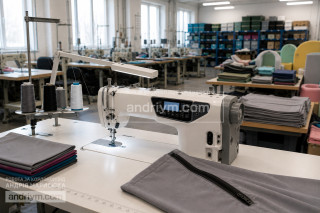
Industrial sewing machines and equipment
Vacancies may require experience with an industrial lockstitch machine, overlock machine or coverstitch machine. The exact equipment depends on the products and manufacturing technology used by the company. Experience with a domestic sewing machine does not necessarily mean a worker is ready for an industrial production environment, so candidates should ask about the machine type and expected operations in advance.
A sewing machinist may be expected to thread the machine correctly, replace a bobbin or needle, monitor thread tension and make basic adjustments to working parameters. Independent adjustment or intervention in machinery should only take place within the worker's skills, instructions and authorised scope. Machine repairs or tasks requiring separate technical qualifications should not automatically be assigned to a sewing machinist.
Typical sewing machinist operations
Depending on the vacancy, duties may include joining prepared components, finishing edges, producing straight and specialised seams, working with zips and buttons, and performing other operations required by the manufacturing process for a particular product. On a production line, one worker may be responsible for a single defined operation, while a smaller workshop may require a broader range of sewing tasks.
Checking the quality of one's own stitching is an important part of the job. Workers may need to watch for uneven stitching, skipped stitches, broken threads, incorrect thread tension, misaligned components and other visible defects. The specific acceptance criteria should correspond to the company's quality requirements for the particular product.
Technical specifications, samples, tolerances and quality control
A professionally organised production process should provide workers with clear instructions, such as a technical specification, approved sample, work instruction or another form of operation description used by the company. This may define the sequence of work, seam parameters, permitted tolerances and quality criteria. A sewing machinist should understand what constitutes an acceptable result and whom to notify if there is a problem with the material, cut components or machinery.
Depending on the product, defects may include uneven stitching, skipped stitches, fabric puckering, incorrect alignment of components or damage to the material. Where rework is required, candidates should find out how defects are recorded, who determines their cause and how time spent correcting the product is accounted for. Workers should not be assessed against quality requirements that were never clearly communicated to them.
Output targets, piecework and production records
Sewing factories may record the number of completed operations or finished pieces. Employers may also use production targets, piecework systems or pay linked to the number of completed items if the arrangement complies with the contract and applicable law. Candidates should receive a clear written explanation of what counts as a unit of output, what target applies, how results are recorded, and how defects and rework are treated.
Production targets, piecework or payment per item must not be used to disguise remuneration below the statutory minimum where the relevant minimum-pay protection applies to the employment or civil-law relationship. Before signing a contract, candidates should separately establish any guaranteed rate and any variable component of remuneration.
Sewing machinist pay in Poland in 2026
There is no single reliable salary figure that applies to every sewing machinist or seamstress vacancy in Poland. Remuneration depends on the contract, qualifications, operations performed, working time, pay system and applicable supplements. Job offers should therefore be compared using gross pay and clear calculation rules rather than only an advertised amount that a candidate is supposedly expected to receive as take-home pay.
In 2026, the statutory minimum wage for full-time employment under an umowa o pracę is PLN 4,806 gross per month. The statutory minimum hourly rate for civil-law contracts covered by the relevant minimum-rate rules, including typical umowa zlecenie arrangements, is PLN 31.40 gross per hour. Current official rates can be checked through Publiczne Służby Zatrudnienia.
Net pay is not the same as gross pay and cannot be accurately determined from the job title alone. It depends on factors including the type of contract, contributions, the worker's tax situation, the number of paid hours and any supplements required by law or the contract. A promise of a fixed take-home amount without a calculation based on the worker's actual circumstances should therefore be checked carefully.
Experience, skills tests and language requirements
An employer may look for an experienced sewing machinist or a candidate who can be trained for specific operations. For experienced workers, relevant factors may include confident use of the required machinery, compliance with production specifications, consistent quality and the ability to identify defects. If a skills test is requested before employment, its scope, duration, purpose and conditions should be clear. A skills assessment should not turn into a full unpaid production shift.
The level of Polish required depends on the workplace, but workers need to understand operational instructions, production requirements and occupational health and safety information, commonly referred to in Poland as BHP. If a candidate does not understand an instruction that affects safety or product quality, it should be clarified before the operation is performed.
Written contract and clear employment conditions
A contract with a foreign worker, whether an umowa o pracę or a civil-law contract such as an umowa zlecenie, must be concluded in writing before the person starts work. The employer or other entity commissioning the work must provide the worker with a copy of the concluded contract. Before starting work, the candidate should also know who the employer or contracting entity is, what type of contract is being offered, what remuneration applies and which duties are included.
If a foreign worker does not understand Polish sufficiently to understand the contract, the written content of the contract must be provided before signing in a language version that the person can understand, in accordance with the applicable rules. Workers should not start a job based solely on verbal promises concerning pay, schedules, bonuses, accommodation or duties. General official information about the legal employment of foreign workers is available from Państwowa Inspekcja Pracy.
Shifts, working hours and overtime
Sewing factories may operate one or several shifts. Schedules depend on the production system and legal form of employment, so claims that all vacancies use the same 8-, 10- or 12-hour shifts are misleading. Before signing a contract, candidates should check shift length, the number of working days, breaks, the method used to record working time and the rules for changing schedules.
Night work and overtime are not the same thing. Supplements, working-time limits and compensation rules depend on the legal basis of the work and the specific circumstances. If a vacancy advertises higher pay for night hours, weekends or additional working time, candidates should obtain a written explanation of how the additional payment is calculated and when it applies.
Accommodation, transport and deductions from pay
Accommodation and transport are not automatically included with every sewing job in Poland. Some employers or agencies may arrange accommodation or transport to work, while others do not. If accommodation is offered, candidates should establish its cost, address or location, number of people per room, utility charges, deposit, rules for leaving the accommodation and any connection between housing and the employment relationship before moving in.
Potential deductions from pay should also be checked, including charges for accommodation, transport, work clothing or other services. Workers should understand the basis for each deduction and see the relevant terms in their documentation. Phrases such as “free accommodation” should be verified against the contract and actual conditions rather than treated as a guarantee.
BHP and safety in sewing production
Sewing production involves occupational risks even when the work is not classified as heavy physical labour. Workers handle needles, scissors and cutting elements and work close to moving machinery. Proper machine guards, adequate workplace lighting, safe handling of tools and compliance with BHP instructions are important parts of workplace safety.
Ergonomics also matters during prolonged sewing work, including chair and table height, the position of the back and arms, and repetitive movements. Depending on the materials and production area, workers may also be exposed to noise, textile dust or other workplace factors. Employers should assess occupational risks and implement appropriate organisational and technical measures and, where required by the working conditions, suitable personal protective equipment.
Legal employment of a foreign worker in Poland in 2026
Legal employment of a foreign worker in Poland requires both the legality of the person's stay and the right to perform work to be considered. The specific requirements depend on the person's legal status and the rules applicable to that situation. In some cases, an appropriate work permit or registered declaration entrusting work may be required, while legislation may provide access to the labour market without such a document in other circumstances. Not every legal basis for staying in Poland automatically includes the right to work.
The position and conditions under which a foreign worker actually performs work should correspond to the documents defining the lawful conditions of that work where such documents are required. One legal mechanism should not be assumed to substitute freely for another. Before work begins, the applicable procedure should be identified for the person's specific legal status and the required formalities should be verified.
General official information on legal employment, contracts, lawful stay and the right of foreign workers to work in Poland should be checked through Państwowa Inspekcja Pracy. Rules can change, so information in a vacancy advertisement or provided by an intermediary should not replace verification against current official requirements.
KRAZ verification, job-offer checklist and warning signs
If a vacancy is offered through an employment agency, the agency should be checked in the official KRAZ — Krajowy Rejestr Agencji Zatrudnienia. The register can be searched through the official KRAZ register. A matching business name alone is not sufficient: candidates should verify the agency's identifying details, the validity and current status of its registration, and the registered type of services, including pośrednictwo pracy or praca tymczasowa, depending on the services the agency actually offers.
The agency details shown in the contract, vacancy and correspondence should match the entity actually providing the service. A current KRAZ registration is useful for verifying an agency, but it does not by itself guarantee a particular vacancy, salary level, accommodation standard or the reliability of every individual offer.
- Confirm the full name of the employer or agency and check which entity will actually sign the contract.
- Check the type of contract, gross pay rate, payment date and method, and the rules for bonuses and other supplements.
- Ask what products are manufactured, which sewing operations are required, which industrial machines are used and what experience is expected.
- Check the schedule, working-time recording system, night shifts and overtime rules.
- If output targets, piecework or payment per item applies, obtain a clear written explanation of the calculation and production-recording system.
- Clarify quality criteria, permitted tolerances and defects, inspection procedures and rules for rework.
- Check accommodation and transport costs and all stated deductions.
- Verify that the legal basis for your stay permits work and that the correct legal employment mechanism has been applied to your situation.
- If an agency is involved, verify its identifying details, the validity and current status of its KRAZ registration and the registered type of services.
Warning signs include being required to work a full shift without proper formalities, refusal to provide the contract before work begins, an unclear pay rate with no gross figure or calculation method, prolonged “unpaid testing”, unexplained deductions, promises of guaranteed high take-home pay regardless of hours or contract type, concealed employer details, or pressure to sign documents that the candidate does not understand immediately.
Editorial note: the legal information and statutory minimum pay figures in this article were checked against official sources as of 14 August 2026. Polish rules on the employment of foreign workers, an individual's legal status and official pay rates can change, so before applying for a vacancy, signing a contract or starting work, check the current requirements again on official government resources and compare them with the documents provided by the specific employer.
